


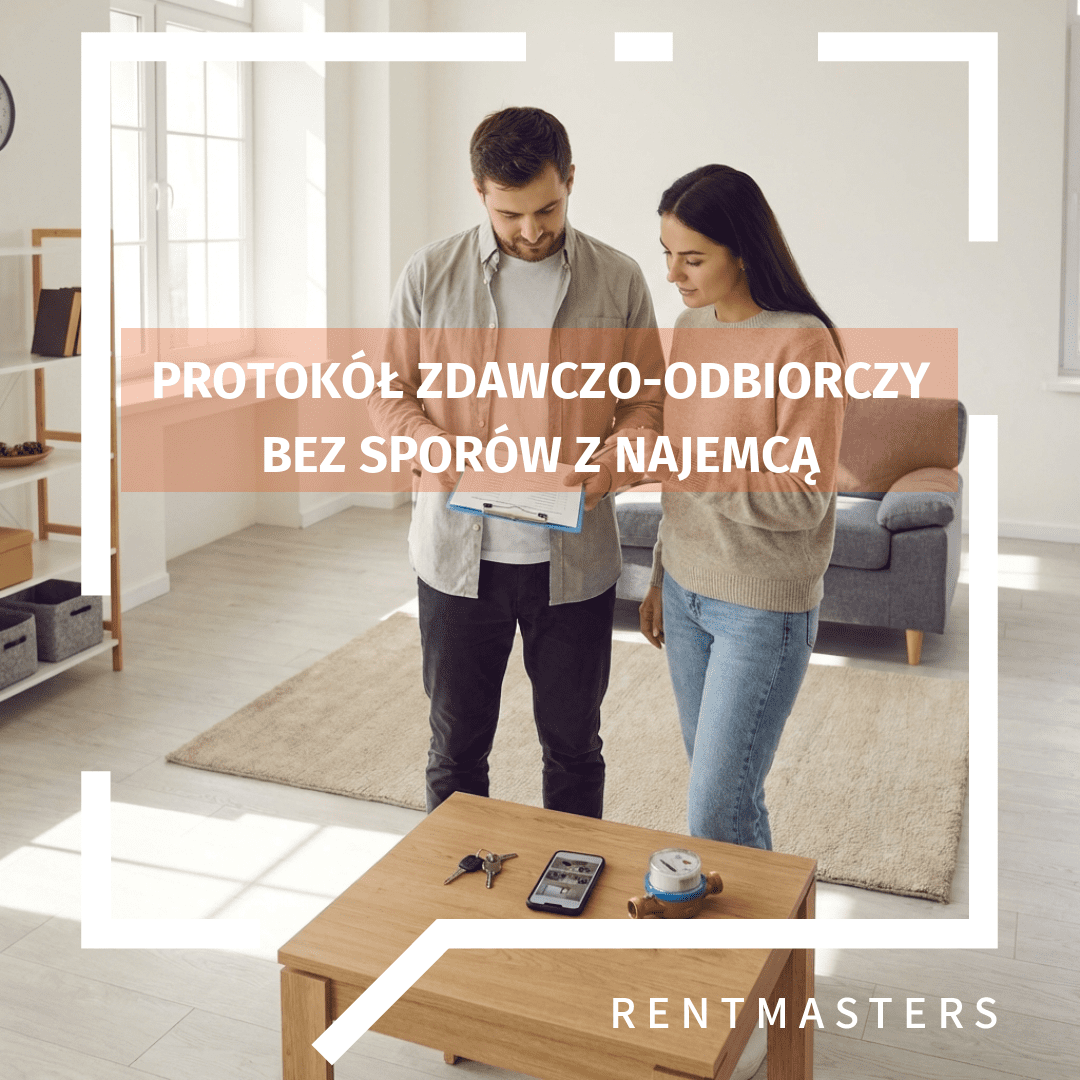
Download the flat handover template
PDF in Polish · Editable DOCX in Polish
Complete the property details, meter readings, keys, equipment and condition together. Add photographs and record any comments before signing. The supplied template is in Polish.
Signing the lease agreement is only half the battle. The other half begins on the day the keys are handed over, when the landlord and tenant jointly inspect the apartment, taking notes on the meters, furnishings, and the technical condition of the premises. This is when a document is created that, in practice, is more important than many verbal agreements: the apartment handover protocol . A well-prepared protocol facilitates the settlement of the deposit and provides both parties with a clear reference point for the end of the lease. In our daily work with apartments, we see that most disputes arise not from ill will, but from a lack of precision: "that's how it was," "I don't remember that," "the furniture was in working order," "the wall was clean." To avoid such situations, it's worth treating the protocol not as a formality, but as a practical tool. It's important to remember that the protocol isn't just for the landlord's benefit. It's a safeguard for the tenant, who has the right to demonstrate that certain signs of wear or minor imperfections were present upon moving into the property.
The most common mistake: a "quick" document
Most problems start with a seemingly innocent rush. The keys are ready, the tenant wants to move things in, the landlord has another meeting, so the minutes are written in five minutes. A few general sentences, a signature, and that's it. Such a document usually contains phrases like "apartment in good condition" or "complete furnishings." It sounds correct, but in a dispute, it means practically nothing. What does "good condition" mean? Is a scratched countertop a defect? Was a chair with a loose leg functional? If you want to truly secure a lease , the description must be specific, not vague.
What should a good handover protocol include?
There's no single perfect template for every home, but there are elements that should almost always be present. The more organized the document, the easier it is to return to it after a few or a dozen months.
1. Basic data
- date and place of preparation,
- owner and tenant details,
- address of the premises,
- connection with a specific lease agreement,
- date of handover of the apartment.
2. Counter readings
This is one of the most important points. You should enter readings for all available utilities, such as electricity, gas, water, and heating, if billed individually. It's best to do this without abbreviations and include the meter number if visible. It's also a good idea to take photos of your meters with the date clearly visible.
3. List of keys and remote controls
It's a good idea to clearly indicate in the report how many sets of keys were provided. This applies not only to the entrance door, but also to:
- mailbox keys,
- remote controls for the gate or garage,
- keys to the storage unit,
- access cards or key fobs.
4. Description of the rooms
Here, it's worth getting down to the detail. Instead of writing "living room in good condition," it's better to note what's actually visible: the condition of the walls, floor, windows, doors, sockets, lighting, and furniture. The description doesn't have to be literary. It should be factual. For example: "wall by the window – minor paint wear," "panel under the desk – approx. 8 cm scratch," "sofa – no wear, mechanism in working order."
5. Equipment and appliances
Each piece of equipment should be entered as precisely as possible. This is especially true for household appliances and electronics, as these are the items most frequently questioned about their functionality and wear and tear. It's also worth including the model and color of the equipment.
- fridge, oven, hob, dishwasher, washing machine,
- free-standing furniture and built-in furniture,
- lamps, blinds, curtains,
- table, chairs, bed, mattress, wardrobes,
- additional items, e.g. hairdryer, vacuum cleaner, kettle.
If the equipment shows visible signs of use, it's worth describing this immediately. Not to discourage the tenant, but to avoid any future doubts.
How to describe the condition of the apartment so that the document is truly useful?
The best rule is: write as if you were going to return to this document in a year and remember nothing. The minutes should refresh your memory of the apartment without you having to guess what the author meant.
Photos as an attachment, not an add-on
Even the best description won't replace photographic documentation. Therefore, a good report should be supplemented with photos taken on the day of the apartment handover. This isn't about aesthetically pleasing photos for the listing, but rather a clear record of the apartment's condition. In practice, a combination of two types of photos works best:
- wide shots of entire rooms,
- close-ups of places with visible signs of use.
- It is worth taking photos of the upholstery of sofas and mattresses because these are the most frequently stained and expensive pieces of equipment.
If the property has been prepared for presentation and advertising, materials prepared during the marketing phase are also helpful. Landlords who invest in interior photography and 360-degree tours usually have a better frame of reference for assessing the apartment's condition before and after the lease.
The moment of handing over the apartment is important
It's best to complete the report when the property is prepared, cleaned, and ready for occupancy. If minor repairs are still being made, chaos and omissions can easily arise. It's important to ensure the property is ready for occupancy upon handover:
- the lighting worked in all rooms,
- you could check household appliances,
- there was access to meters,
- the place was emptied of random things,
- both sides had time to walk calmly through the apartment.
This may seem obvious, but it is precisely the lack of conditions for a thorough inspection that causes later disputes.
When does an owner feel the lack of good protocol the most?
In practice, the lack of a reliable protocol hits owners the hardest:
- are renting an apartment for the first time,
- live outside Krakow or abroad,
- they have several premises and do not remember the details of each of them,
- they hand over the apartment in a hurry,
- they do not keep photographic documentation.
In such situations, professional rental management is particularly useful, which includes not only contact with the tenant, but also organizing documents, procedures and acceptance procedures.
How to prepare for the preparation of the protocol step by step?
Instead of improvising on key transfer day, it's worth preparing a simple action plan. This process works well for both a single apartment and a larger property portfolio.
- Prepare the apartment for handover: clean, remove unnecessary items, check the operation of appliances.
- Print or prepare a digital template of the protocol with division into rooms.
- List all the equipment, including small items.
- Read the meters and take photos of them.
- Make photographic documentation of each room.
- Walk through the premises with the tenant and discuss each point as it happens.
- Ask both parties to sign each page or initial any attachments.
- Keep a copy in both paper and electronic form.
If the property required some updating or repairs before renting, coordinating the renovations can also be a valuable resource. The better the condition of the property upon arrival, the easier it will be to accurately describe it later.
Protocol is not a lack of trust, but good organization
Sometimes landlords fear that a detailed protocol will be perceived as excessive control. In reality, tenants usually appreciate transparent rules. A clear document demonstrates that both parties understand where they stand. That's why professional rental management isn't based on "we'll agree later," but on well-prepared procedures. These procedures save time, stress, and money. For a more comprehensive look at how to mitigate risk and avoid losing profitability on seemingly minor details, also check out the post "10 Mistakes That Reduce Rental Profitability – How to Avoid Them? " In practice, it's often the details that determine whether a rental is smooth and profitable.
Finally: the less guesswork, the less disputes.
A good handover protocol doesn't have to be complicated. If you want to ensure that the apartment handover, documentation, and subsequent settlements are handled professionally, contact RentMasters. We handle long-term rentals, help prepare properties for rent, and relieve landlords of the day-to-day management burden. Details can be found on the Contact page or in the Offer tab.